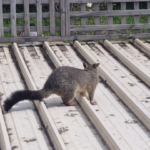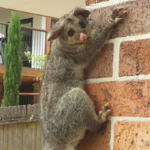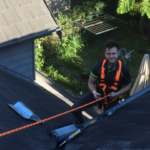
If you’ve been lying awake listening to thumping, scrabbling, or the occasional screech coming from above your ceiling, you’re not alone. Possums moving into roof cavities are among the most common wildlife problems facing Australian homeowners, and they need to be handled carefully, both for the sake of your property and for the animal itself.
The team from Possum Busters walks you through every step of the process: how to confirm what you’re dealing with, what you can safely do yourself, where the legal boundaries are, and what a professional removal looks like from start to finish. By the end, you’ll know exactly what to do next.
Step 1: Confirm it’s actually a possum
Before doing anything else, it’s worth making sure you’re dealing with a possum and not a rat, bird, or bat. The approach to each is different, and under Australian law, the handling requirements vary significantly depending on the species involved.
Possums leave three fairly reliable clues that set them apart from other common roof intruders.
Timing and sound
Possums are nocturnal. Their activity begins around dusk and continues through the night. The sounds they produce are heavier and more deliberate than rats; think loud thumping and clunking as a solid animal moves across your ceiling cavity, rather than the frantic, light scratching of a rodent. You may also hear hissing, screeching, or chattering sounds, particularly if there is more than one possum present or if it’s breeding season.
Droppings
Possum droppings are cylindrical, roughly 2–3 cm long and about 1 cm wide, considerably larger than rat droppings, which are smaller and more pointed. They are typically dark brown to black in colour and may be found near entry points, in the roof cavity, or along fence lines and gutters the possum uses to access your roof. If you’re unsure, our guide to telling the difference between possum and rat droppings covers the key distinctions in detail.
Entry point damage
Possums are significantly larger than rats, so the gaps they use to enter a roof are usually more visible. Look for broken or lifted roof tiles, bent fascia edges, gaps near guttering, or holes around roof vents. Fresh scratch marks and fur caught on rough edges are also reliable indicators.
Not sure what you’re hearing? Our guide to the 5 signs you have a possum in your roof covers the full range of indicators, including how to distinguish possum activity from rats and birds.
Step 2: Do not block the entry point yet
This is the single most important thing to understand before you take any action: do not seal the entry point while the possum may still be inside.
It is a natural instinct to want to close the gap as soon as you find it. But if the possum is still in the roof cavity when you do this, you trap it inside. A trapped possum will cause significant structural damage as it attempts to escape, tearing through insulation, gnawing timber, and potentially compromising wiring. In a worst-case scenario, if it cannot get out, you will be dealing with a deceased animal inside your roof, which presents a far more serious, costly, and distressing problem to resolve.
Never block an entry point until a licensed technician has confirmed the possum has vacated and the cavity is clear. This step must always come last, not first.
Step 3: Locate the entry points (what you can do yourself)
While the actual removal requires a licensed professional, locating entry points is a safe and genuinely useful step you can take yourself during daylight hours. A thorough exterior inspection will help your technician work faster and give you a clearer picture of the problem’s scope before you book a service.
Walk the full perimeter of your property and inspect the roofline from the ground or, if safe to do so, from a ladder; never go onto the roof itself. Look for the following.
- Broken or lifted roof tiles: Even a small gap is large enough for a Common Brushtail Possum to squeeze through. Tiles that have shifted, cracked, or are sitting unevenly are a common entry point.
- Bent or damaged fascia boards: The timber boards that run along the eaves can warp or crack over time, creating gaps where the roof meets the wall.
- Gaps near guttering: Where guttering meets the roof edge or downpipe brackets, small voids can open up, particularly in older properties.
- Uncapped roof vents: Ridge vents, gable vents, and plumbing vents without proper screening are common entry points that are often overlooked.
- Solar panel edges and skylights: The brackets and frames around solar panel installations and skylights frequently leave gaps that possums exploit, particularly at night.
Note down or photograph everything you find. This information is genuinely useful when you call for a quote and will help the technician prepare the right materials for your inspection.
Step 4: Understand the law before doing anything else
In NSW, possums are protected native wildlife under the Biodiversity Conservation Act 2016. This means it is illegal to harm, trap, or relocate a possum without the appropriate wildlife licence, regardless of whether the animal is in your roof, your garden, or anywhere else on your property.
The law also governs where a possum can be released. Even if a licensed technician carries out the trapping, the possum must be released on the same property, within 25 metres of the capture point. It cannot be taken to a park, bushland, or any other location. Possums are highly territorial animals; moving them beyond their home range removes them from their food sources and familiar territory, and research consistently shows that most translocated urban possums do not survive.
Penalties for breaching these provisions can be significant. If you are in doubt about any aspect of what is and is not permitted, the NSW Department of Primary Industries and Regional Development provides guidance on its website, and you can always call our free advice hotline before taking any action.
Attempting to trap, harm, or relocate a possum yourself in NSW is illegal, even if it is causing damage to your property. Licensed removal is not just the ethical choice; it is the legally required one.
Step 5: What a licensed professional will do
Knowing what to expect from a professional removal can make the process feel far less stressful. Here is what a standard Possum Busters job looks like from the moment we arrive.
Roof and cavity inspection
The first visit begins with a thorough inspection of the roof exterior and, where accessible, the cavity itself. Our technicians identify all entry points, not just the obvious ones, and document the findings in a written report. This gives you a complete picture of how the possum got in and what needs to be addressed to prevent it from returning.
Trap placement
A humane cage trap is placed at or near the main entry point, baited appropriately and positioned so the possum encounters it naturally as it exits the roof at dusk. We check traps promptly; possums should never be left in a trap for extended periods, and we monitor the situation closely until the animal is caught.
Humane release
Once captured, the possum is released on your property, within 25 metres of the capture point, in accordance with NSW wildlife regulations. Where possible, this is done near a suitable tree or garden area that gives the animal an immediate sense of familiarity and safety.
Possum box installation
We strongly recommend installing a weatherproof possum nesting box in a suitable nearby tree as part of every removal job. This provides the displaced possum with a secure alternative home, one that closely replicates the tree hollows they naturally seek out. It significantly reduces the likelihood that the possum will attempt to re-enter your roof, keeping the animal safely within its territory. Our team can advise on the best placement for your property.
Entry-point sealing
Once the possum has vacated and the cavity has been confirmed clear, all identified entry points are sealed using appropriate materials, such as metal mesh, weatherproof timber infill, or purpose-made vent covers, depending on the location. Every sealed point comes with our 12-month guarantee: if a possum returns through a previously treated entry within 12 months, we come back and fix it at no additional cost.
Step 6: Seal the entry points (possum-proofing)
Removal without proofing is a temporary fix. Possums are territorial creatures, and they will often return to a roof space they have been using very quickly. Proofing, the process of permanently sealing every entry point identified in the inspection, is what turns a one-off callout into a lasting solution.
Effective proofing requires the right materials for the right locations. Metal mesh is used for larger gaps and vent openings because possums will chew through timber and soft materials if they are determined to re-enter. Fascia repairs require weatherproof timber or hardboard.
Tile-related gaps may need mortar or purpose-made fillers. A thorough inspection ensures no entry points are missed, which is why we always complete proofing as a separate, dedicated step after the removal, not as a rushed add-on at the end of the same visit.
How do I know the possum has left my roof?
This is one of the most common questions we receive, and it’s an important one, because sealing the roof before the possum has vacated is exactly the situation you want to avoid.
The most reliable method is a simple flour or talcum powder test. Before dusk, sprinkle a thin layer of flour or powder across the suspected entry point and any areas where you have noticed fresh droppings or scratch marks.
Check the surface the following morning. If the powder is undisturbed and you heard no activity during the night, it is a good sign the possum is no longer present. Repeating this test over two to three consecutive nights gives you a high level of confidence before any sealing work begins.
A licensed technician will conduct a formal clearance inspection before any entry-point sealing is carried out. This typically includes both a visual inspection of the cavity and confirmation of nocturnal activity patterns.
Frequently Asked Questions About Possum Removal
| Question | Answer |
|---|---|
| Can I remove a possum from my roof myself in NSW? | No, not legally. Under the NSW Biodiversity Conservation Act 2016, possums are protected wildlife. Trapping or relocating them without a licence is illegal and can result in significant fines. Removal must be carried out by a licensed specialist. |
| How do I know if the possum has left my roof? | Sprinkle a thin layer of flour near the suspected entry point before dusk. Check it in the morning; an undisturbed surface and two to three nights of silence are reliable signs the possum has vacated. |
| What noise does a possum make in the roof at night? | Common Brushtail Possums, the most frequent roof intruders, produce heavy thumping and clunking sounds as they move across ceiling cavities. You may also hear scrabbling near entry points and occasional hissing or screeching, particularly during breeding season. |
| How long does it take to get a possum out of your roof? | The initial inspection and trap placement typically takes 1–2 hours. The possum is usually captured within one to two nights. Entry-point sealing is then completed in a follow-up visit once the animal has vacated; the full process is generally wrapped up within a week. |
| What is a possum one-way door, and does it work? | A one-way door is a mesh or flap device fitted over the main entry point, allowing the possum to exit but not re-enter. It works well as part of a broader proofing strategy, but it must only be installed by a licensed technician and combined with sealing all other entry points; otherwise, the possum simply finds another way back in. |
| Will possums damage my roof if left untreated? | Yes. Over time, possums disturb and compress insulation, chew through timber and electrical wiring, and cause urine staining on ceilings. Exposed wiring creates a genuine fire risk. The longer a possum remains in a roof cavity, the more costly the repair bill becomes. |
Ready to remove the possum in your roof?
Dealing with a possum in your roof is one of those problems that genuinely gets worse the longer it’s left. The noise disrupts your sleep, the damage to insulation and wiring accumulates quietly in the background, and once a possum establishes a roof space as its territory, it will keep returning until the entry points are properly sealed.
With over 30 years of experience across Sydney, Canberra, and regional NSW, Possum Busters has resolved thousands of roof possum jobs, from single animals in a Federation terrace to families nesting in commercial buildings. Our team is fully licensed under NSW wildlife regulations, and every job comes with a 12-month guarantee on all sealed entry points.
If you’re not yet sure what you’re dealing with, our free possum advice hotline is a great first step. There’s no obligation, and our team is always happy to talk through the signs before you commit to a booking.
Call us on 1300 663 372 or request a free quote via our Contact page.